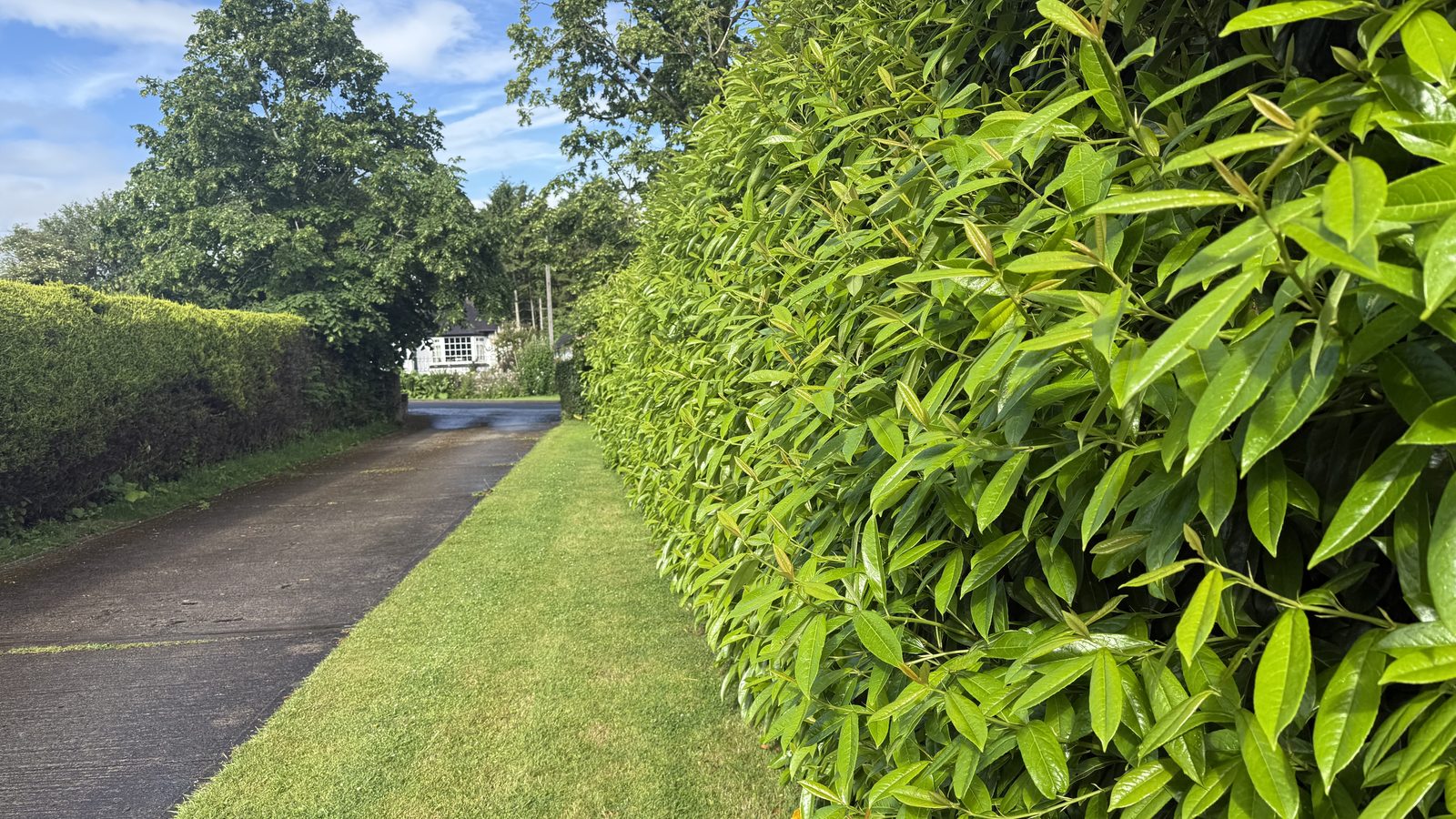
When to cut laurel
The short answer for Yorkshire: late summer to early autumn — typically late August through to mid-September. This gives the plant time to push out a small amount of new growth before the cold arrives, which seals the cuts and prevents die-back. A second, lighter trim in spring (May or June) is possible if you need to keep it tight.
What you want to avoid is cutting in a summer heat wave — freshly cut laurel in full sun browns quickly and looks terrible for months — and cutting after mid-October, when there's not enough time for any wound recovery before the first frosts.
The right tool makes all the difference
This is where most people go wrong. Laurel has large, thick, waxy leaves. A mechanical hedge trimmer — the kind with rapidly oscillating blades — will shred those leaves rather than cut them cleanly. You end up with brown, torn edges sitting on every leaf face that got caught by the blade, and the hedge looks ragged within a week.
For formal hedges where appearance matters
Use bypass secateurs or loppers on each stem, cutting back to a sideshoot or bud. This is slower, but the results are dramatically better. Each cut surface is clean, the remaining leaves are intact, and the hedge comes back looking genuinely tidy rather than hacked.
For less visible runs or commercial hedges
A quality powered trimmer is fine if used correctly. The key is to cut in one direction — parallel to the face of the hedge — rather than working back and forth, which doubles the chance of catching leaf faces. Sharp blades are essential. Dull blades tear rather than cut, and the difference in the result is significant.
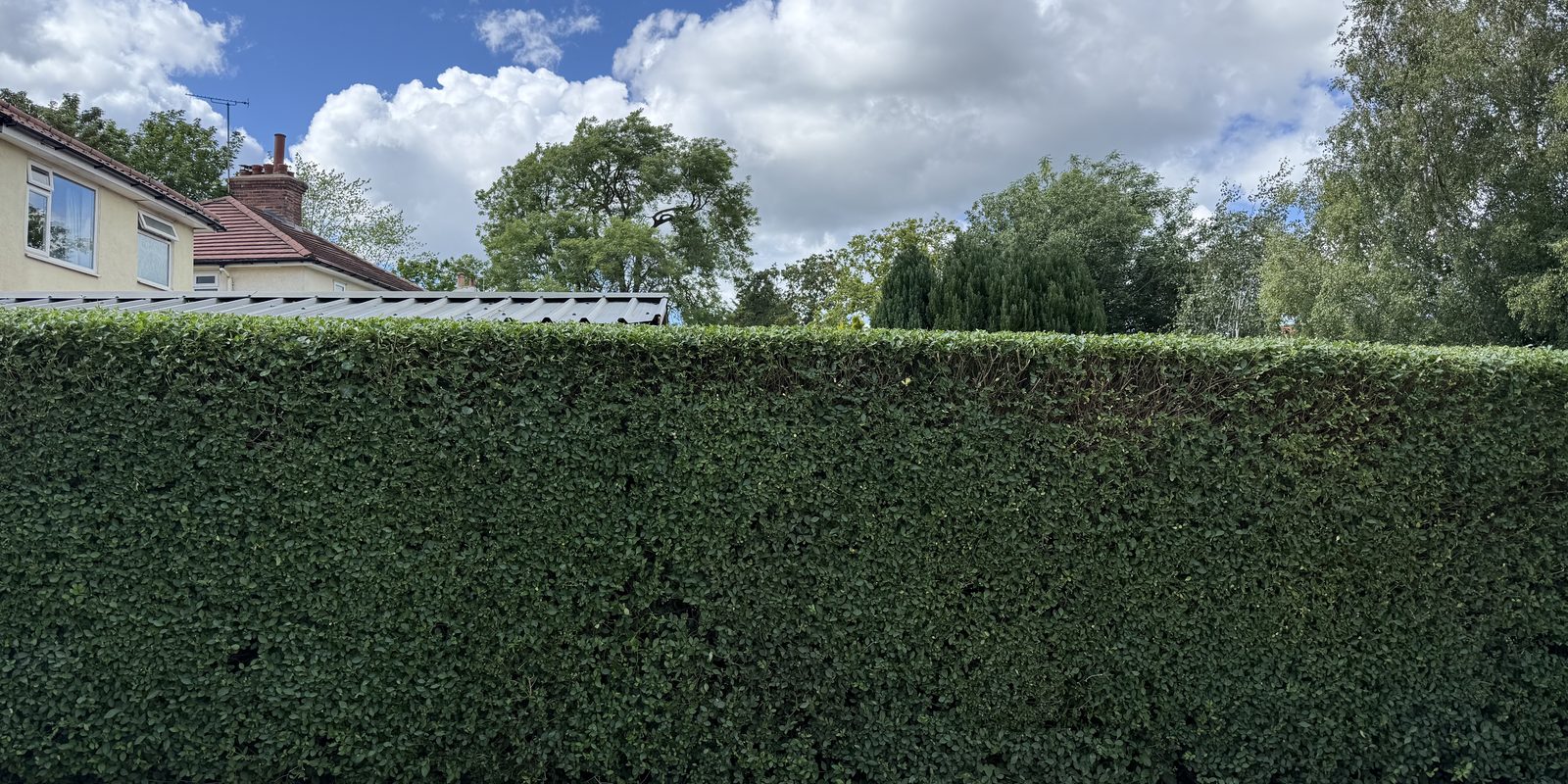
How to get a flat top
A genuinely flat-topped hedge is harder than it looks. The human eye is surprisingly good at spotting gradients, and a hedge that tapers even two or three centimetres across its length will look uneven immediately.
- Run a string line at the target height before you start — this is the most reliable method for long runs
- Work from one end and check constantly rather than relying on eye alone
- Cut less than you think you need to, then review — it's easy to take more off; impossible to put it back
- On a long hedge, stake a cane at each end with a taut line between them, adjusting for any natural ground level changes
- Cut the top last — do the faces first, then finish with the top so any clippings falling on the face can be brushed off clean
Common mistakes
Cutting too hard in one go. If a laurel has been neglected for several years, bringing it back in a single cut is tempting but risky. A significant cut back in one season stresses the plant, can expose bare brown stems, and may slow recovery. Better to take it back by 30–40% per year over two or three seasons.
Ignoring the base. Laurel tends to build up a skirt of crossing stems near ground level. Keeping the base clean — slightly narrower than the top, like an A-shape in cross-section — lets light reach the lower leaves and prevents the bottom becoming bare and leggy over time.
Not clearing properly. Laurel clippings are large and wet. If left on the hedge or on neighbouring plants they sit, rot and can cause disease. Clear thoroughly and dispose of them properly — laurel leaves take a long time to compost.
Laurel hedge cutting in Harrogate & Yorkshire
We cut laurel hedges across Harrogate, Knaresborough, Ripon, Leeds and the wider Yorkshire area. Whether it's a front garden screen that needs tidying or a long boundary run on a commercial or estate property, we can quote and schedule a visit.